recipe
Nigerian Jollof Rice with Parboiled Long-Grain Rice
Tomato-and-pepper rice with a measured sauce reduction, a tightly covered finish and practical fixes for grains that are still firm. This version starts with dry parboiled rice.
AI editorial review: 2026-10-22
Researched recipe; not cooked or tested by Culinara.
Jump to ingredients and methodPrint using your browser’s Print command.
Ingredients and method
About 4 main-dish or 6 side servings (estimated)
Ingredients
- 2 US cups dry long-grain parboiled (converted) white rice, rinsed and thoroughly drained; not instant rice
- 1 pound Roma tomatoes, cored and chopped
- 2 medium red bell peppers, stemmed, seeded and chopped
- 1 medium yellow onion, half chopped and half thinly sliced
- 1/4 to 1 Scotch bonnet or habanero pepper, stem removed; start small
- 1/4 US cup neutral oil
- 2 tablespoons tomato paste
- 2 garlic cloves, minced
- 1 teaspoon grated fresh ginger
- 1 teaspoon Nigerian or mild Caribbean-style curry powder
- 1 teaspoon dried thyme and 1 dried bay leaf
- 1 1/2 US cups low-sodium chicken or vegetable broth, plus hot water if needed
- 1/2 teaspoon fine salt, then more to taste; black pepper to taste
Method
- Use a heavy 4-quart pot with a close-fitting lid. Blend the tomatoes, bell peppers, chopped half of the onion and hot pepper until smooth; add only a tablespoon or two of water if the blender needs help.
- In a separate saucepan, simmer the puree uncovered or under a splatter screen until substantially thicker. Stir and scrape the base often. This evaporation stage matters more than the clock.
- Warm the oil in the main pot over medium heat. Soften the sliced onion, then stir in the tomato paste until it darkens slightly. Add garlic, ginger, curry powder, thyme and bay leaf; stir briefly without scorching.
- Add the reduced puree and continue cooking, stirring, until the fried sauce is thick, glossy and reduced to roughly 1 1/4 US cups, including oil and aromatics. A spoon dragged across the base should briefly leave a clear trail. Treat this as an approximate reduction target; do not lift and pour a heavy pot of hot sauce to measure it.
- Stir in the 1 1/2 cups broth, salt and black pepper and bring to a simmer. Fold in the drained rice. Cover tightly, reduce to low and maintain gentle steaming. Begin checking after about 25 minutes; these are cooking estimates, not tested timings.
- Lift some rice from the edge and taste a grain. If still firm and the pot is dry, sprinkle in 2 tablespoons hot water, cover and continue, checking again after several minutes. If firm but wet, keep covered and cook without more water. Once tender, let visible excess moisture escape briefly over low heat.
- Turn off the heat, keep covered for 10 minutes, remove the bay leaf and loosen the grains gently. Serve with grilled meat, a salad or fried ripe plantain. Avoid scraping any bitter, burned layer into the rice.
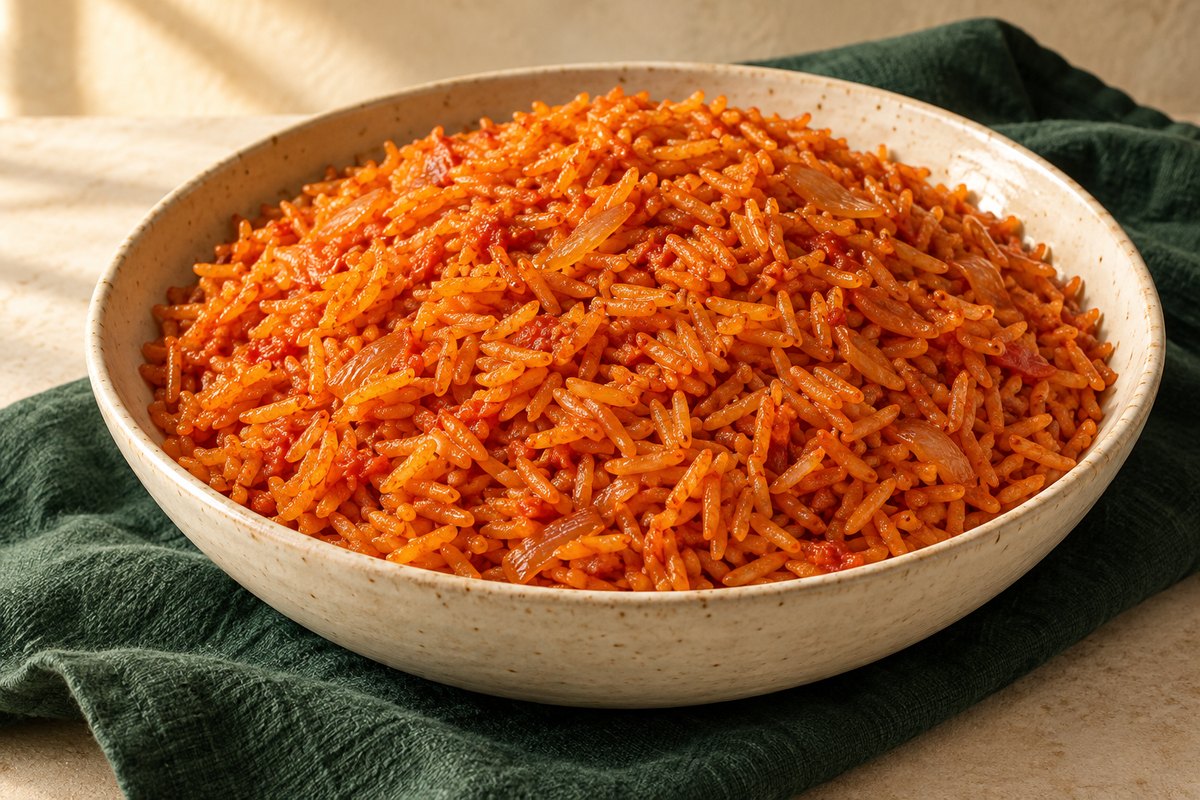
AI-generated illustration: Orange-red long-grain jollof rice in an ivory bowl, without garnish. Texture, portion size and plating are illustrative rather than measured results.
OpenAI · Usage terms
Image details
Proportional 1200×800 JPEG derivative of the original AI illustration; no crop.
Which rice and which jollof?
Jollof belongs to a wider West African cooking tradition; this is a Nigerian-style version using parboiled long-grain rice, curry powder and thyme. The packet term parboiled describes processing before sale. Do not preboil the rice for this method: recipes that do so need different liquid quantities.
The measured sauce is an editorial control for variable tomatoes and peppers. It includes vegetable solids, so it is not a universal water-to-rice ratio. Basmati, brown rice and instant rice need their own method.
Keep steam in; correct one problem at a time
A broad, thin pan or a loose lid can lose moisture before the rice softens. Use the lowest heat that keeps gentle steam moving. Repeated stirring breaks grains; turn them only enough to check and redistribute. Deliberately burning the pot is not necessary for this home version.
Sources: [1]
Rice leftovers
Chill promptly in shallow containers within two hours, or one hour above 90°F. Keep refrigerated at 40°F or below, use within 3–4 days and reheat to 165°F with a splash of water.
Research sources
- Lola Osinkolu / Chef Lola’s Kitchen — Nigerian Jollof Rice (checked 2026-10-22)
- Flo Chinyere / All Nigerian Recipes — How to Cook Nigerian Jollof Rice (checked 2026-10-22)
- Ozoz Sokoh / Serious Eats — Nigerian Jollof Rice (checked 2026-10-22)
- U.S. FDA — Safe Food Handling (checked 2026-10-22)
- University of Illinois Extension — Leftovers (checked 2026-10-22)