recipe
Akara: Nigerian Bean Fritters
A thick, whipped batter of peeled black-eyed peas, onion and pepper, fried in small spoonfuls with a first-fritter check for the center.
AI editorial review: 2026-10-22
Researched recipe; not cooked or tested by Culinara.
Jump to ingredients and methodPrint using your browser’s Print command.
Ingredients and method
Ingredients
- 1 1/2 US cups dry whole black-eyed peas, measured before soaking and peeling
- 1/4 US cup very finely diced onion
- 1/2 to 1 Scotch bonnet or habanero, stemmed and finely minced; optional
- 1/2 teaspoon fine salt
- 1/4 US cup cool water to start blending, plus small additions only if needed
- Neutral high-heat oil, such as canola, to reach 2 inches deep in a suitable pot
Method
- Sort the beans for stones and rinse. Soak in cool water for 10–20 minutes, rub off the loosened skins and rinse repeatedly, pouring the floating skins through a sieve. Cover the peeled beans with plenty of fresh water and refrigerate for 6–8 hours. Drain very thoroughly.
- Use a strong blender or food processor, a mixing bowl, a whisk or hand mixer, a deep heavy pot, a frying thermometer and a slotted spoon. Blend the beans with the starting water, stopping to scrape as needed. Add further water by teaspoons only when the blades cannot move the beans. Aim for a thick paste without hard bean pieces that holds a mound on a spoon.
- Beat the paste until noticeably lighter and aerated, using a hand mixer for a few minutes or a whisk for longer. Stop when it looks fluffy rather than simply stirring for a fixed time. Fold in the onion, hot pepper and salt. Do not taste uncooked bean batter.
- Pour oil 2 inches deep into a pot large enough to leave generous empty space above it; it should be no more than half full. Heat to about 350°F. Scoop one rounded tablespoon of batter close to the surface and carefully slide it into the oil, using a second dry spoon to release it.
- Fry the first fritter, turning as needed, until evenly golden brown, approximately 5–6 minutes. Lift out, let it cool briefly, then cut through the center. It should be cooked and airy, without a wet raw-bean core. Lower the temperature or make smaller scoops if it colors before the middle cooks.
- Fry the remaining batter in small batches with space between pieces, maintaining roughly 340–350°F. Allow the oil to recover between batches. Turn gently for even color, then lift onto a rack or a plate lined with paper towels. Serve warm once cool enough to eat.
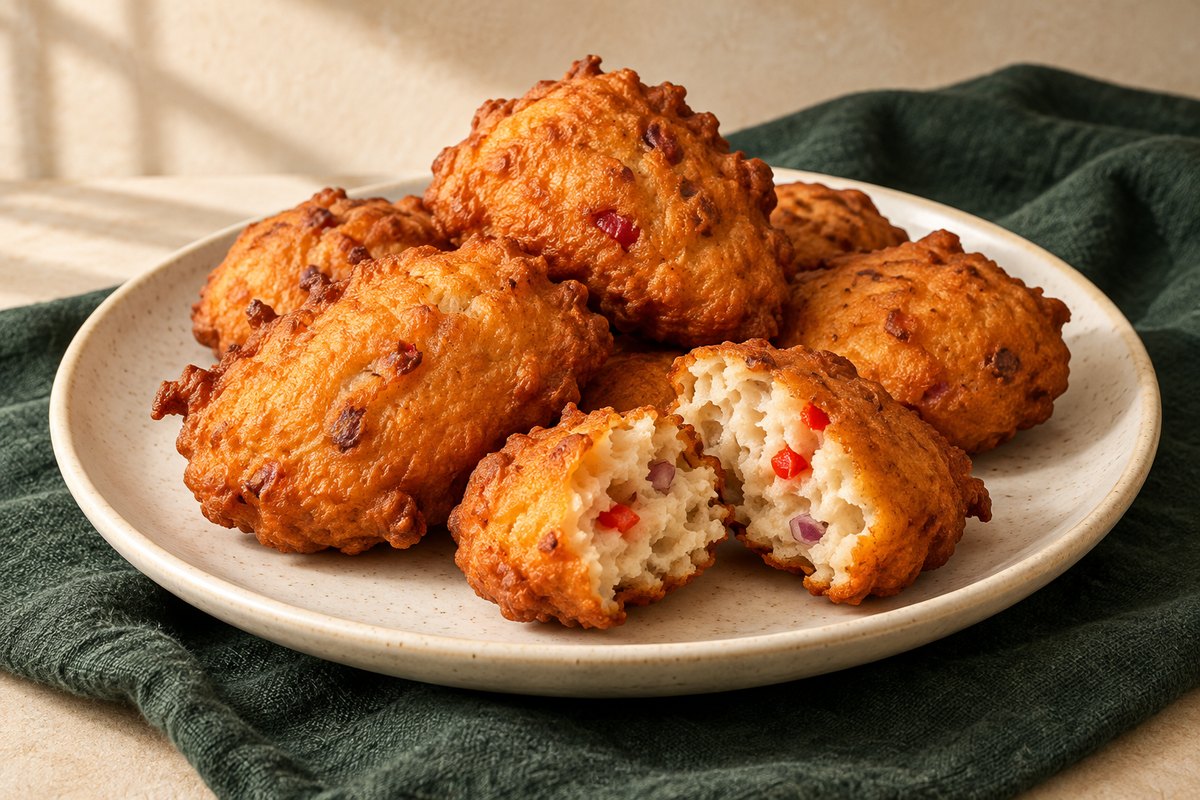
AI-generated illustration: Golden irregular bean fritters, one opened to show its pale center with pepper and onion flecks. Texture, portion size and plating are illustrative rather than measured results.
OpenAI · Usage terms
Image details
Proportional 1200×800 JPEG derivative of the original AI illustration; no crop.
The batter supplies the structure
Akara are fried bean cakes; this version follows KikiFoodies’ simple beans, onion, pepper and salt approach. Whipping adds air, while restrained blending water helps each spoonful hold together. There is no flour, egg or baking powder in the listed batter.
The consulted authors use different soaking times, seasonings and mixing tools. This version chooses the longer refrigerated soak to help soften peeled beans for a home blender. The finished paste still needs to be thick: an overnight soak is not a reason to pour in extra blending water.
When fritters spread or brown too quickly
Flat, spreading fritters point to excess water, insufficient aeration or shallow oil. Pause after the first fritter and inspect the batter and oil temperature before continuing. Hard beans or a weak blender are better addressed with adequate soaking and smaller blending batches than by flooding the mixture with water.
Black-eyed peas are a practical US choice; Nigerian brown or honey beans are also used, with a different flavor. Bean flour needs its own hydration method. The listed version has no added wheat, milk, egg or shellfish, but shared frying oil can carry allergens from other foods.
Fry with room in the pot
Use a deep, stable pot and keep the oil well below the rim so bubbling food cannot overflow it. Stay at the stove, keep water and wet utensils away from hot oil, and let the oil cool fully before handling. If oil smokes, turn off the heat. Never put water on an oil fire.
Lift out loose crumbs between batches. Discard oil that develops an unusual smell, persistent foam or smoke; repeated heating changes its quality.
Keep leftovers safely
Akara are crispest fresh; reheating will change the crust. Refrigerate leftovers in shallow containers within 2 hours of cooking, or 1 hour when the surroundings are above 90°F. Keep the refrigerator at 40°F or colder, use within 3–4 days and reheat to 165°F.
Research sources
- KikiFoodies — Akara (checked 2026-10-22)
- Lola Osinkolu / Chef Lola's Kitchen — Akara: Black Eyed Peas Fritters (checked 2026-10-22)
- University of Illinois Extension — Kitchen Fires (checked 2026-10-22)
- Hong Kong Centre for Food Safety — Safe Use of Oil for Deep-frying (checked 2026-10-22)
- U.S. FDA — Safe Food Handling (checked 2026-10-22)
- University of Illinois Extension — Leftovers (checked 2026-10-22)
- University of Illinois Extension — Refrigerator Storage (checked 2026-10-22)