recipe
Ewa Riro: Nigerian Stewed Beans
Soft black-eyed peas folded into a separate palm-oil onion and pepper sauce, with a stovetop method and clear bean-tenderness cues.
AI editorial review: 2026-10-22
Researched recipe; not cooked or tested by Culinara.
Jump to ingredients and methodPrint using your browser’s Print command.
Ingredients and method
Ingredients
- 2 US cups dry black-eyed peas, unpeeled
- 2 medium onions, divided: one diced and one roughly chopped
- 1 Scotch bonnet or habanero, stemmed; use less for milder beans
- 1/4 US cup food-grade unrefined red palm oil; not palm kernel oil
- 6 US cups water (1.4 liters) for the beans, plus more as needed
- 2–4 tablespoons water for blending the pepper sauce
- 1 teaspoon vegetable bouillon powder, optional; check its salt and allergen label
- 1/2 teaspoon fine salt to start, plus more to taste
Method
- Spread the beans on a tray, remove stones and damaged beans, then rinse. Put them in a heavy 4-quart pot with the diced onion and 6 cups water. These beans keep their skins.
- Bring to a boil, then lower to a steady simmer with the lid partly open. Cook until a bean crushes easily with a fork and has no chalky center, commonly 60–90 minutes but sometimes longer. Check periodically; if liquid falls below the beans before they soften, add hot water in small amounts. Stir gently near the bottom to check for sticking.
- Meanwhile, coarsely blend the remaining onion and hot pepper with just enough of the measured blending water to move the blades. Use gloves or wash your hands thoroughly after handling hot peppers, and avoid touching your eyes.
- Warm the red palm oil in a second heavy pot over medium-low heat until fluid. Keep its red color; do not bleach it or bring it to smoking. Carefully spoon in the wet onion-pepper mixture to limit splashing, then add the optional bouillon and starting salt.
- Cook the sauce at a gentle bubbling pace for about 15–20 minutes, stirring often, until the onion has softened, the mixture is concentrated and a little oil is visible around it. If it catches, lower the heat and add a spoonful of water.
- When the beans are thoroughly soft, stir them and their remaining cooking liquid into the sauce. If much liquid remains, simmer uncovered to thicken; do not rush this by draining away all the bean broth. Simmer gently for about 10 minutes, stirring along the bottom, until the sauce and beans form a thick, spoonable stew.
- Taste and adjust salt. Crush a few beans against the pot if you want a creamier consistency, leaving plenty whole. Add a splash of hot water if too stiff. Serve with fried ripe plantain, bread or plain rice.
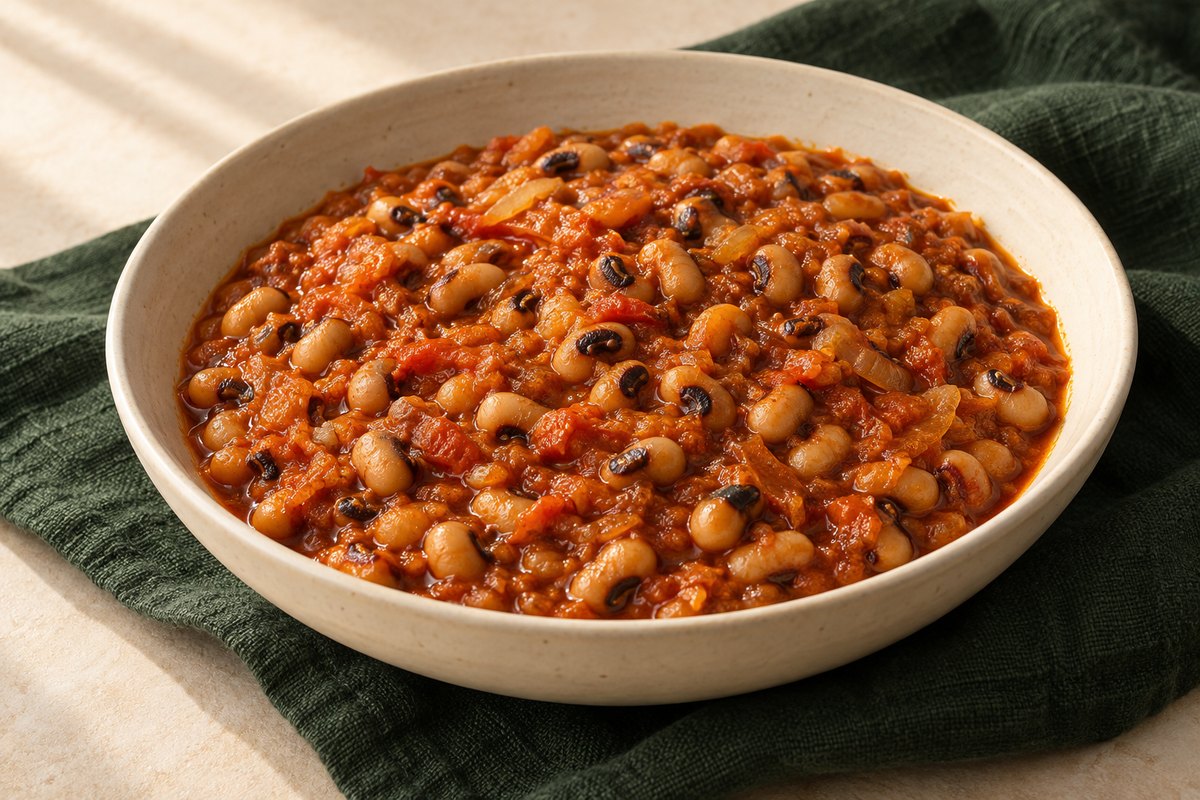
AI-generated illustration: Black-eyed peas in a thick palm-oil, onion and pepper sauce. Texture, portion size and plating are illustrative rather than measured results.
OpenAI · Usage terms
Image details
Proportional 1200×800 JPEG derivative of the original AI illustration; no crop.
Choose the beans and keep the skins
Ewa riro is a Nigerian stewed-bean dish associated with Yoruba cooking. Black-eyed peas and Nigerian brown or honey beans are common choices. This recipe uses dry black-eyed peas for a readily identifiable US ingredient; honey beans contribute a different sweetness and may soften at a different rate.
Unlike the beans prepared for moi moi and akara, these are cooked with their skins. Old beans can take much longer, so softness matters more than the clock. Canned beans are already cooked and do not fit the dry-bean water quantity or timing.
A separate sauce, then a gentle finish
Abi Olayiwola describes cooking the beans before combining them with a separately reduced onion-pepper sauce. That is the method here. Lola Osinkolu presents another version that boils peppers with the beans and includes smoked turkey and crayfish. The stages are different, so their cooking times are not interchangeable.
Red palm oil contributes the characteristic color and flavor. Neutral oil will cook the sauce but produce a different dish. The vegetable version here omits seafood and meat; check bouillon for wheat, soy or other allergens, and use a confirmed vegetarian product if that matters to you.
Keep leftovers safely
Warm the beans gently with a splash of water, stirring to heat them evenly. Refrigerate leftovers in shallow containers within 2 hours of cooking, or 1 hour when the surroundings are above 90°F. Keep the refrigerator at 40°F or colder, use within 3–4 days and reheat to 165°F.
Research sources
- Abi Olayiwola / Eat Well Abi — Nigerian Beans Porridge (Ewa Riro) (checked 2026-10-22)
- Lola Osinkolu / Chef Lola's Kitchen — Ewa Riro: Stewed Beans (checked 2026-10-22)
- U.S. FDA — Safe Food Handling (checked 2026-10-22)
- University of Illinois Extension — Leftovers (checked 2026-10-22)
- University of Illinois Extension — Refrigerator Storage (checked 2026-10-22)