recipe
Ogbono Soup with Beef and Spinach
A smooth, glossy Nigerian draw soup made with ground ogbono seeds. A no-fry mixing method helps disperse the powder, with measured broth and easy thickness adjustments.
AI editorial review: 2026-10-22
Researched recipe; not cooked or tested by Culinara.
Jump to ingredients and methodPrint using your browser’s Print command.
Ingredients and method
About 4–6 servings with a starch (estimated)
Ingredients
- 1 pound boneless beef chuck, cut into 1-inch pieces
- 1 small onion, finely chopped
- 5 US cups water for the beef, plus more as needed
- 1/2 teaspoon fine salt, then more to taste
- 1 US cup finely ground ogbono, measured after grinding
- 1/3 US cup edible unrefined red palm oil
- 1 tablespoon ground dried Nigerian crayfish (crustacean shellfish)
- 1/4 to 1/2 teaspoon cayenne pepper, to taste
- 4 ounces fresh spinach, washed, drained and chopped
Method
- Put the beef, onion, salt and 5 cups water in a heavy pot. Bring to a boil, then partly cover and simmer gently until the beef is fork-tender. Add water as necessary to keep the meat submerged. Chuck can require well over an hour.
- Lift the beef out. Measure the cooking broth and top up with hot water to exactly 4 US cups. Reserve the beef and keep the broth hot.
- In another dry, heavy pot, warm the red palm oil only enough to liquefy it, then remove from the heat. Stir the ground ogbono into the oil to form an even paste. Do not fry or toast this mixture.
- Gradually whisk in the hot broth, beginning with a small splash and smoothing each addition before adding more. Return to low heat once the mixture is evenly combined.
- Bring to a gentle simmer and cook for about 20 minutes, stirring along the bottom frequently. It should become smooth, thick and stretchy when lifted from a spoon. Add hot water 2 tablespoons at a time if too stiff; do not let it catch on the pot.
- Stir in crayfish, cayenne and the cooked beef. Simmer until the beef is hot throughout, then add spinach and cook just until wilted. Taste for salt. Serve with prepared eba, pounded yam or another swallow, allowing for a little further thickening as the soup stands.
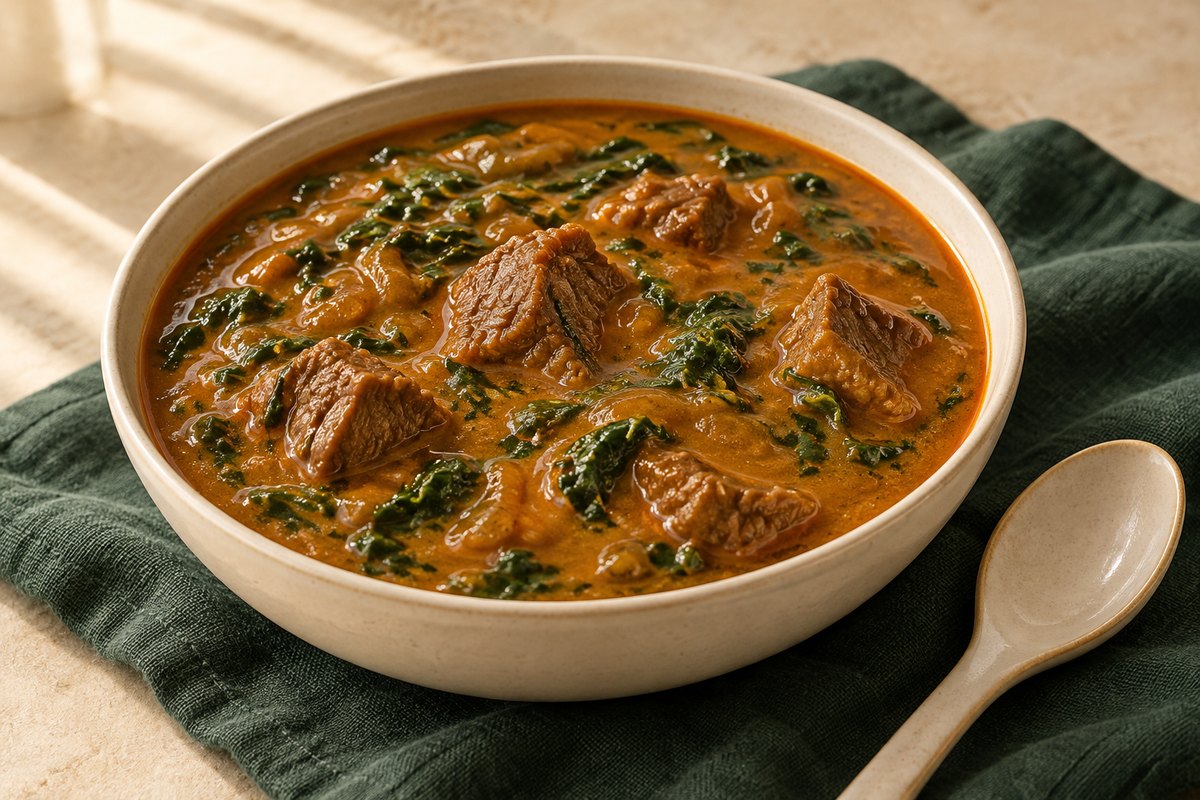
AI-generated illustration: Glossy orange-brown ogbono soup with beef chunks and a little spinach. Texture, portion size and plating are illustrative rather than measured results.
OpenAI · Usage terms
Image details
Proportional 1200×800 JPEG derivative of the original AI illustration; no crop.
What makes it draw?
Ground ogbono seeds provide the soup’s characteristic elastic texture. It is especially associated with Igbo cooking, while other Nigerian communities also prepare it; obe apon is a Yoruba name. This beef-and-spinach version is a simplified home adaptation, without stockfish, periwinkles or an assortment of offal.
Buy plain culinary ogbono from a reliable supplier. Measure after grinding, because whole and ground seed volumes differ. Egusi, mango flesh and ordinary mango pits are not replacements for ogbono.
Too thick, too thin or lumpy?
For a stiff soup, stir in hot water gradually and let it return to a simmer before deciding on more. For a thin soup, first give the ogbono time to cook and thicken; avoid adding handfuls of dry powder directly to the pot.
Press early lumps against the pot with the back of a spoon. Mixing the powder with barely melted oil before adding broth makes this easier. High heat can scorch the base; gentle heat and regular stirring are more useful than worrying about whether the lid is on.
Substitutions and storage
Crayfish brings shellfish flavor; leaving it out makes a milder beef version. It is not a vegetarian soup. Red palm oil gives a characteristic color and flavor that a neutral oil will not reproduce.
Cool in shallow containers promptly. Refrigerate at 40°F or below for 3–4 days, or freeze. When reheating, loosen with a little water and stir until the entire soup reaches 165°F.
Research sources
- Lola Osinkolu / Chef Lola’s Kitchen — Ogbono Soup (checked 2026-10-22)
- Flo Chinyere / All Nigerian Recipes — Nigerian Ogbono Soup Recipe (checked 2026-10-22)
- FoodSafety.gov — Cold Food Storage Chart (checked 2026-10-22)
- FoodSafety.gov — Cook to a Safe Minimum Internal Temperature (checked 2026-10-22)